
Understanding the Sexual Response Cycle: Order, Phases & Key Insights for Sexual Wellness
9th Jul 2025
The journey of sexual arousal and fulfillment is both complex and deeply personal. Whether you're in a relationship, exploring self-intimacy, or simply curious about sexual health, understanding the stages of arousal can enrich your experience and enhance your sexual wellness. The sexual response cycle, a framework developed by researchers William Masters and Virginia Johnson in the 1960s, describes the distinct phases our bodies and minds go through during sexual arousal and activity. This model has since helped countless individuals better understand their own responses, communicate their needs, and cultivate healthier, more satisfying intimate lives.
In this blog, we'll explore the four stages of the sexual response cycle, what to expect in each phase, and how this knowledge can empower you to enhance your overall sexual well-being.
What is the Sexual Response Cycle?
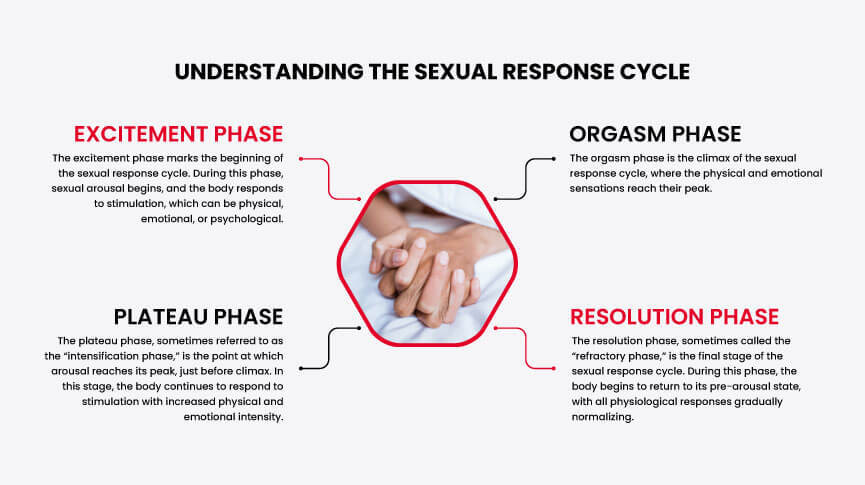
The sexual response cycle is a four-phase model that outlines the physiological and emotional changes the body experiences during sexual arousal and climax. These phases include excitement, plateau, orgasm, and resolution. Understanding this cycle provides insight into how the body responds during intimate moments, helping individuals and couples improve communication, manage expectations, and address any sexual wellness concerns.
Each phase is a natural part of the arousal and release process, though people may experience these stages differently. Factors like emotional state, physical health, and relationship dynamics can all influence how each phase unfolds. Having a clear understanding of these stages can make the experience of intimacy more fulfilling by helping you recognize your body’s cues, anticipate responses, and engage in intimacy with greater awareness.
The Four Phases of the Sexual Response Cycle
1. Excitement Phase (Arousal Phase)
The excitement phase marks the beginning of the sexual response cycle. During this phase, sexual arousal begins, and the body responds to stimulation, which can be physical, emotional, or psychological. This phase can last anywhere from a few minutes to several hours, depending on the individual and the nature of the experience.
What Happens During the Excitement Phase?
In this initial phase, the body undergoes several physical changes in response to arousal. Blood flow to the genital area increases, causing the penis to become erect in men and the clitoris and labia to swell in women. Breathing becomes faster, and the heart rate and blood pressure begin to rise. Muscles in the body may start to tense as a natural response to arousal.
In addition to physical changes, the excitement phase is marked by heightened sensitivity, an increased focus on sensuality, and an overall sense of pleasure. Emotionally, people may feel more connected to their partner or heightened levels of anticipation, excitement, and desire.
How to Enhance the Excitement Phase
To deepen the excitement phase, partners can experiment with foreplay, sensory play, and communication about what feels pleasurable. Focusing on creating a comfortable and relaxed environment can also help prolong this phase, allowing for a slower buildup of arousal that intensifies pleasure.
2. Plateau Phase
The plateau phase, sometimes referred to as the “intensification phase,” is the point at which arousal reaches its peak, just before climax. In this stage, the body continues to respond to stimulation with increased physical and emotional intensity. The plateau phase can last longer or shorter depending on factors like level of stimulation, comfort, and individual response.
What Happens During the Plateau Phase?
During the plateau phase, the body’s physiological responses from the excitement phase intensify. Muscle tension increases, and the body’s sensitivity to touch becomes heightened. In women, the vaginal walls continue to swell, and the clitoris may become even more sensitive. For men, the penis remains fully erect, and pre-ejaculate fluid may be released.
The emotional experience of this phase is often characterized by a high level of focus and engagement with sensations, with many people experiencing a strong anticipation of climax. Breathing becomes quicker, and some individuals may notice a slight flushing of the skin or feel warm due to increased blood flow.
How to Enhance the Plateau Phase
Taking time during the plateau phase can enhance pleasure and make the experience of orgasm more powerful. Communication is key; asking a partner to slow down, change pressure, or experiment with different forms of touch can increase the pleasure and intensity of this stage. Trying new sensations or using varying techniques can keep the plateau phase exciting and prevent it from feeling repetitive.
3. Orgasm Phase
The orgasm phase is the climax of the sexual response cycle, where the physical and emotional sensations reach their peak. This phase is generally brief, lasting only a few seconds but offering one of the most intense experiences of pleasure and release.
What Happens During the Orgasm Phase?
During orgasm, the body undergoes rhythmic muscle contractions, including in the pelvic region, that release built-up tension. In men, this phase results in ejaculation, where semen is released from the penis. Women experience rhythmic contractions of the vaginal muscles and pelvic floor. The heart rate and blood pressure peak during this phase, and the body often reaches a point of full release and relaxation.
Emotionally, the orgasm phase is often characterized by intense feelings of pleasure and relief, as the body and mind experience a flood of endorphins, dopamine, and oxytocin, known as the “love hormone.” These chemicals create a sense of euphoria, bonding, and connection, especially when experienced with a partner.
How to Enhance the Orgasm Phase
While the orgasm phase is relatively short, it can be intensified through techniques such as rhythmic breathing, slowing down the build-up, or engaging in mindfulness practices that allow you to fully experience the sensations. Focusing on connection with your partner or experimenting with various forms of stimulation can also contribute to a more fulfilling and intense orgasm experience.
4. Resolution Phase
The resolution phase, sometimes called the “refractory phase,” is the final stage of the sexual response cycle. During this phase, the body begins to return to its pre-arousal state, with all physiological responses gradually normalizing. For many, this phase is accompanied by a deep sense of relaxation and satisfaction.
What Happens During the Resolution Phase?
In this phase, the body slowly cools down from the heightened states of arousal experienced in the previous stages. The heart rate and breathing gradually return to normal, and the blood flow to the genitals decreases. In men, the penis returns to its non-erect state, while in women, the clitoral and labial swelling subsides.
Emotionally, people often feel a sense of calm, contentment, or closeness with their partner. However, the length and nature of this phase can vary. Some people experience a quicker transition, while others enjoy lingering in a state of post-coital relaxation or affection, especially when shared with a partner.
How to Enhance the Resolution Phase
Spending time in the resolution phase with aftercare can deepen the bond between partners. Cuddling, talking, or simply being present with each other can make this phase more intimate and emotionally satisfying. Taking time for aftercare is especially important for individuals who may feel vulnerable or need reassurance after an intense experience.
Benefits of Understanding the Sexual Response Cycle
Knowing the stages of the sexual response cycle can have profound benefits for individuals and couples. Here’s how understanding this cycle can enhance your overall sexual wellness:
1. Improved Communication
Understanding the stages of arousal makes it easier to communicate needs, desires, and boundaries with a partner. By discussing what feels good at each phase, couples can create a more fulfilling intimate experience together.
2. Enhanced Self-Awareness
Recognizing the natural progression of arousal helps individuals become more in tune with their bodies and responses. This self-awareness leads to greater confidence, self-acceptance, and the ability to enjoy intimacy more fully.
3. Greater Emotional Connection
Understanding the sexual response cycle can foster a stronger emotional bond with a partner. Couples can work together to honor each other’s needs and preferences, building trust and connection through shared experiences and open dialogue.
4. Health Benefits
Engaging in a healthy sexual response cycle has numerous health benefits, from stress reduction and improved immune function to better heart health. The endorphins and oxytocin released during the cycle also promote mental well-being and foster a sense of contentment and joy.
Dos and Don’ts for a Healthy Sexual Response Cycle
To make the most of your experience and enhance sexual wellness, consider these dos and don’ts:
Dos:
- Do communicate openly: Discuss each phase with your partner, sharing what you enjoy and what you need.
- Do take your time: Don’t rush through each phase; allowing each stage to fully unfold enhances the experience.
- Do focus on connection: Remember that intimacy is about connection, not just physical activity.
- Do practice self-care: Take care of your mental and physical health to support a healthy sexual response cycle.
Don'ts:
- Don't pressure yourself or your partner: Everyone experiences the cycle differently, and there’s no “perfect” way to go through each stage.
- Don't ignore discomfort: If something doesn’t feel right, take a moment to address it.
- Don't forget aftercare: Take time for aftercare to enhance connection and relaxation in the resolution phase.
- Don't compare your experience: Each person’s response cycle is unique, so focus on what feels good for you and your partner.
Final Thoughts on the Sexual Response Cycle and Sexual Wellness
Understanding the sexual response cycle is a powerful tool for building a more satisfying and healthy intimate life. Recognizing and honoring each phase can help you and your partner enjoy a deeper, more connected experience. Whether you’re looking to enhance self-awareness, improve communication, or simply experience more pleasure, understanding the stages of arousal and how they unfold can enrich your journey toward sexual wellness.
Embrace each phase, prioritize connection, and remember that the cycle is a natural, beautiful process that can bring greater fulfillment and joy to your intimate life. With this knowledge, you can create a space where both you and your partner feel seen, respected, and connected, building a foundation for a satisfying and empowering experience.